Congrats to Gordana Dukovic for Being Promoted to Full Professor
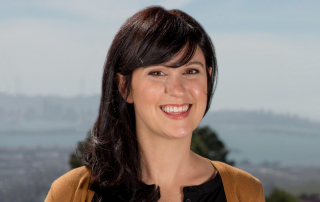
A big congratulations to Dr. Dukovic for her recent promotion to a full professorship!
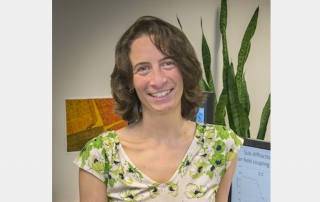
Congratulations to Dr. Katie Shulenberger for being awarded a 2021-2022 Cottrell fellowship! The fellowship supports postdocs looking to move into academic positions in the COVID-19 pandemic era. As part of her fellowship responsibilities Katie will be co-teaching CHEM 1400 (Foundations of Chemistry) this semester with Dr. Dukovic.
The School of Physical Sciences now has two new Associate Deans. Franklin Dollar of the UCI Department of Physics & Astronomy is the new Associate Dean of Graduate Studies, and Mu-Chun Chen, also of Physics & Astronomy is the new Associate Dean of Diversity, Equity and Inclusion (DEI). Both appointees come from long histories of experience with both engaging with the graduate student community at Physical Sciences, as well as stimulating action in the DEI realm.
Very recently, Dollar was part of an effort in his department to secure funding for the mentors of a graduate student-led program called Physics & Astronomy Community Excellence (PACE), which aims to give graduate students the peer support they may need. “Our vision is to foster a student-focused, transdisciplinary graduate experience in which a diverse student body can both succeed and lead in their chosen path,” Dollar said. “We will develop new support mechanisms to promote broader collaboration across the school, while making sure that students have the support they need.”
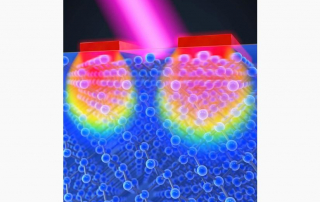
A team of physicists at CU Boulder has solved the mystery behind a perplexing phenomenon in the nano realm: why some ultra-small heat sources cool down faster if you pack them closer together. The findings, which will publish this week in the journal Proceedings of the National Academy of Sciences (PNAS), could one day help the tech industry design speedier electronic devices that overheat less.
“Often heat is a challenging consideration in designing electronics. You build a device then discover that it’s heating up faster than desired,” said study co-author Joshua Knobloch, postdoctoral research associate at JILA, a joint research institute between CU Boulder and the National Institute of Standards and Technology (NIST). “Our goal is to understand the fundamental physics involved so we can engineer future devices to efficiently manage the flow of heat.”
For laser science, one major goal is to achieve full control over the spatial, temporal and polarization properties of light, and to learn how to precisely manipulate these properties. A property of light is called the Orbital Angular Momentum (OAM), that depends on the spatial distribution of the phase (or crests) of a donut-shaped light beam. More recently, a new variant of OAM was discovered – called the spatial-temporal OAM (ST-OAM), with much more elusive properties, since the phase/crests of light evolve both temporally and spatially. In a collaboration led by senior scientist Dr. Chen-Ting Liao, working with graduate student Guan Gui and JILA Fellows Margaret Murnane and Henry Kapteyn, the team explored how such beams change after propagating through nonlinear crystals that can change their color…
You must be a STROBE member to access this section of the website. To get access to Seminar Videos, Publication PDFs, Career Opportunities and more, request a STROBE membership.
If you are already a STROBE member, log in and then return to this page.
Professor Mary Scott has been selected as the inaugural Micron Corporation Early Career Award winner in the College of Engineering. The award comes with $50,000 based on Professor Scott’s research potential and leadership in diversity and due to the connection of her efforts to Micron’s interests.
Calina Glynn (Callie) is a fifth year Biochemistry, Molecular and Structural Biology (BMSB) student in Professor Jose Rodriguez’s group. Prior to coming to UCLA in 2016, Callie received her B.A. in Biochemistry and Molecular Biology from Boston University, where she studied Fe-S cluster binding proteins with Dr. Deborah Perlstein.
Callie’s graduate work focuses on uncovering the structures of prion fibrils that bestow them with unique biophysical properties. Prion diseases arise via the self-templated misfolding of the soluble prion protein into pathogenic protease, denaturant, and heat resistant prion fibrils (PrPSc). Callie has uncovered the structure of a protease and denaturant-resistant human prion fibril that explains the unique biophysical properties characteristic of PrPSc using cryo-electron microscopy. Callie aims to uncover differences in the favored fold, stability, and seeding ability of fibrils from disease-associated variants of the human prion protein and other mammalian prion proteins whose aggregation leads to disease.
The title of Callie’s Fowler Fellow talk is “Structures at the Core of Mammalian Prions”.
Dr. Marcus Gallagher-Jones joined Professor Jose Rodriguez’s group in 2017. In the Rodriguez group he has developed pioneering methods in electron diffraction and determining important structures. “Everywhere he goes, Marcus makes a lasting positive impression on colleagues,” said Rodriguez. “He is highly regarded in our structural biology group, is an active member of our NSF-sponsored science and technology center. In short, Marcus is an outstanding colleague and an exceptional young scientist and leader”. Marcus received his bachelor’s degree in Molecular Biology and Biochemistry from Durham University (2010) and his Ph.D. in Molecular Biophysics from the University of Liverpool (2015). While his Ph.D. was awarded by Liverpool, Marcus conducted his thesis work half-way around the world, at one of the most powerful X-ray lasers in the world – the Japanese X-ray free electron laser facility (XFEL) and synchrotron source (Spring-8).
Congrats to Megan Finnigan, a STROBE Undergraduate Research Scholar, for Winning a Poster Prize at the 2021 Advanced Light Source User Meeting Student Poster Competition! This summer, Megan is working with Drs. David Shapiro, Roger Falcone, and Vanessa Schoeppler at UC Berkeley and Lawrence Berkeley National Laboratory.